
 Download plain text
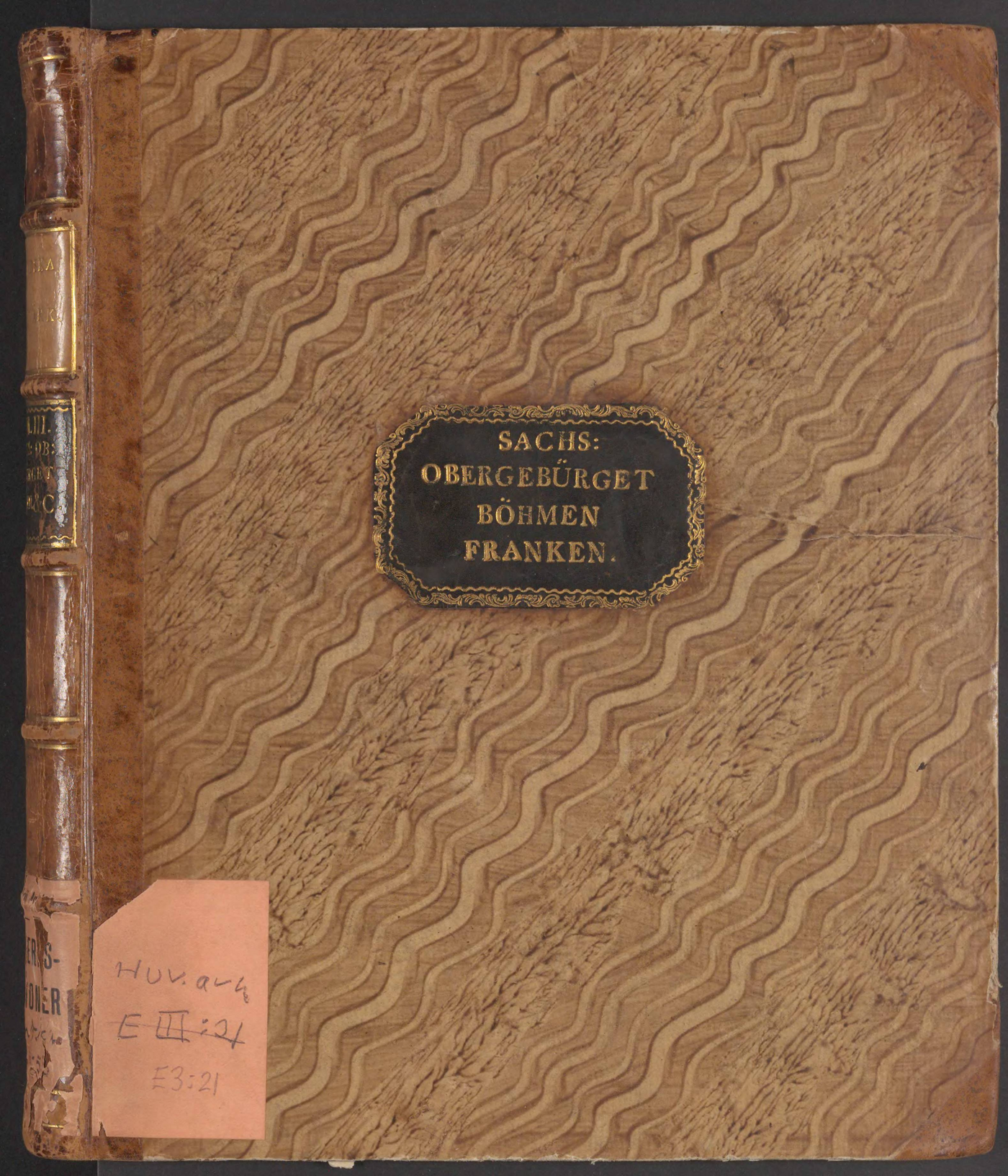
Alexander Funck Bd. 3 (1749)
Data quality
- The transcription has not been fully proofread and may contain OCR errors.
- Place names in the text have not been systematically marked.
- Marked places may not yet be linked to coordinates in the gazetteer.
- Illustrations may be incomplete or not yet reviewed.
- This volume has not been editorially approved for publication.
This report forms the third volume of Alexander Funck's (1716–1797) extensive survey of Central European mining regions. Whereas the first volume focused on the Harz Mountains and the second on Saxony, Mansfeld and Freiberg, the present manuscript examines the mining districts of the Saxon Ore Mountains (Erzgebirge), Bohemia, and parts of Franconia. Together, the three volumes document Funck's effort to compare the principal mining regions of Central Europe and to identify the geological and technical principles that underpinned their success.
The report begins in the tin-mining districts of Altenberg, Zinnwald, Ehrenfriedersdorf, Geising, and Johanngeorgenstadt, before continuing into the mining centres of Schneeberg, Joachimsthal (Jáchymov), Platten (Horní Blatná), Schlaggenwald (Horní Slavkov), Katharinaberg (Hora Svaté Kateřiny), and other Bohemian districts. Unlike the preceding volume, which concentrated heavily on silver mining and metallurgy, this manuscript is dominated by the geology and extraction of tin, cobalt, bismuth and associated minerals.
A recurring theme throughout the volume is the structure of tin deposits. Funck devotes extensive attention to the famous tin stockworks of Altenberg and the tin-bearing lodes of Zinnwald and neighbouring districts. He describes the geological relationships between veins, stockworks, fissures and host rocks, discussing how mineralisation spread through the surrounding rock and how different types of deposits should be mined. The Altenberg section is especially detailed and contains lengthy discussions of underground extraction techniques, timbering, filling methods and the consequences of major mine collapses.
Compared with the previous volumes, this manuscript places greater emphasis on mineral processing and ore preparation. Funck provides detailed descriptions of tin dressing, stamping, washing and sorting, including techniques used to separate tin ore from iron-bearing minerals. Particularly noteworthy are his discussions of magnetic separation at Platten and the treatment of complex tin ores before smelting. He also records the operation of washing works, ore-concentration systems and smelting furnaces in exceptional detail.
Another major subject is the cobalt industry centred on Schneeberg and Johanngeorgenstadt. Funck examines cobalt-bearing veins, the organisation of cobalt mining, and the manufacture of blue pigments. He describes the specialised cobalt works, roasting processes, pigment production and commercial arrangements governing the sale of cobalt ores. These sections are especially valuable because they document one of Europe's most important cobalt-producing regions at a time when cobalt pigments were a commodity of international significance.
The report also contains important material on Joachimsthal, Platten, and the Bohemian mining districts. Here Funck compares Saxon and Bohemian practices, often finding Saxon mining methods superior in matters of mine construction, drainage and organisation. Such comparisons are characteristic of Funck's method throughout the manuscript. Rather than merely describing what he observed, he continually evaluates competing practices and assesses their relative advantages.
In contrast to both the Harz volume and the Freiberg volume, this report is less concerned with the administration of mining companies and more focused on the relationship between geology, ore occurrence and extraction techniques. Tin stockworks, cobalt veins, placer deposits, faulting, vein intersections and mineral associations are discussed at length, making the manuscript one of Funck's most geological works. In this respect it reflects the influence of the developing eighteenth-century mining sciences and Funck's own interest in understanding the structure of ore deposits rather than simply cataloguing mining operations.
Wheras the Harz report concentrated on mining practice and underground engineering and the Saxon volume broadened the perspective to encompass mining systems and metallurgy; the present volume focuses most strongly on geological structure, ore genesis and mineral processing. It therefore stands at the intersection of practical mining, economic geology and the emerging earth sciences of the eighteenth century.