
 Download plain text
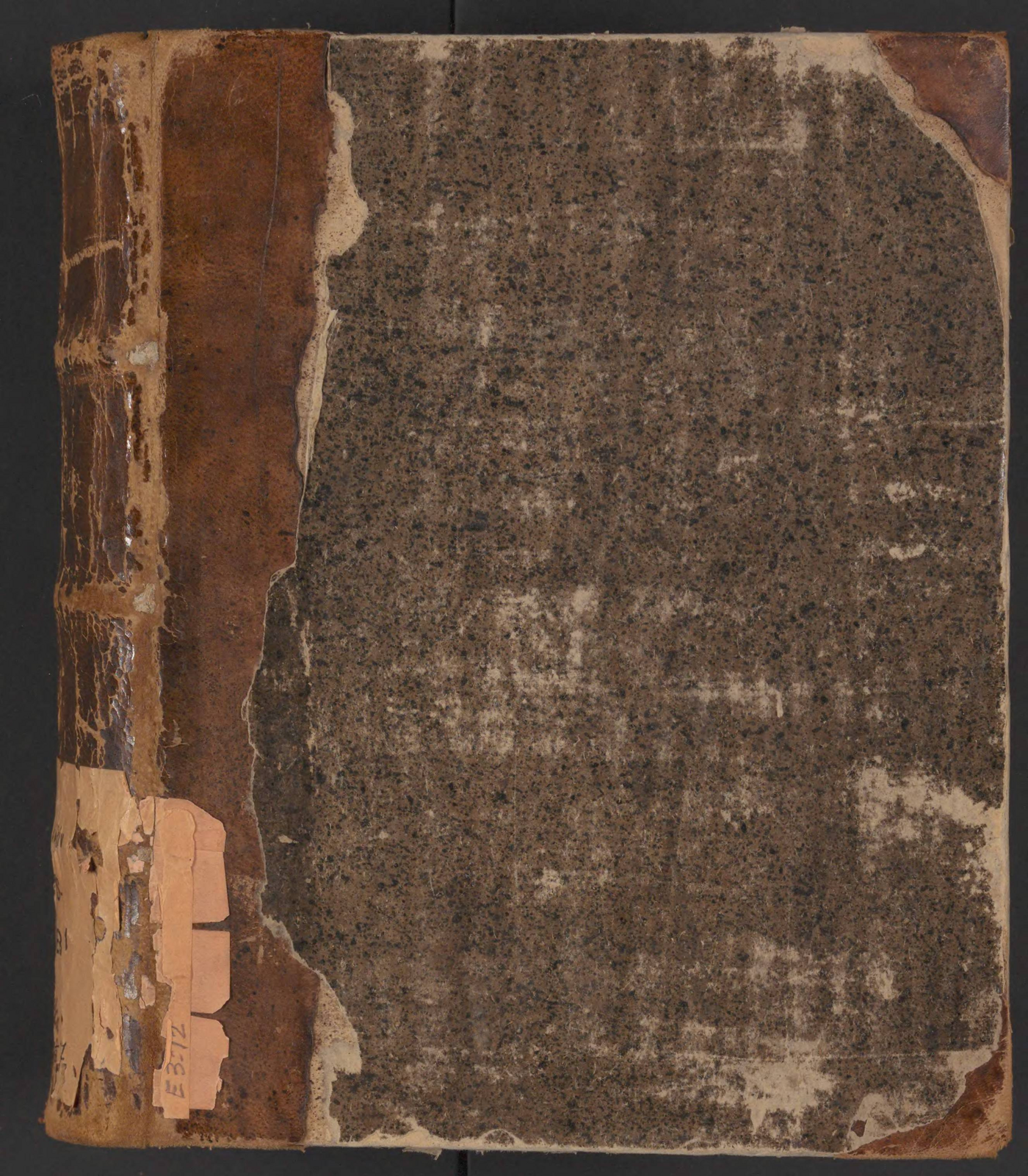
H. Kahlmeter report of German mines (1718–1727)
Data quality
- The transcription has not been fully proofread and may contain OCR errors.
- Place names in the text have not been systematically marked.
- Marked places may not yet be linked to coordinates in the gazetteer.
- Illustrations may be incomplete or not yet reviewed.
- This volume has not been editorially approved for publication.
This report was compiled by Henric Kalmeter (1693–1750), one of the most experienced Swedish officials engaged in foreign study travel during the early eighteenth century. Born in Falun and trained within Bergskollegium, Kalmeter spent almost a decade travelling through Europe on official assignments. While his other reports focus primarily on mining and metallurgy, this volume predominantly focuses on trade, manufactures and economic administration. After returning to Sweden he entered Kommerskollegium, eventually becoming one of the kingdom's leading officials in matters of commerce and trade statistics. The present report reflects this broader range of interests and occupies an important place between Kalmeter's earlier mining surveys and his later work in economic administration.
Although the manuscript contains extensive accounts of mining districts in Hesse, Saxony, Bohemia and neighbouring territories, it differs markedly from Kalmeter's other travel reports. His report on England and France combines mining with observations on industry and trade, while his technical survey of German mining regions concentrates heavily on mines, smelting works and metallurgical processes. By contrast, this volume presents a much wider investigation of the productive resources of states and regions. Mining remains central, but it is placed within a broader economic landscape including manufactures, forestry, transport systems, salt production, textile industries, state institutions and commercial infrastructure.
Particularly detailed sections are devoted to the mining districts of Hesse, including Franckenberg, Itter, Riegelsdorf and the Meissner region. Kalmeter discusses copper mining, iron production, alum manufacture, vitriol works, coal mining and salt production, paying close attention to both technical processes and economic organisation. The report contains some of the most extensive descriptions in the Bergskollegium travel reports of alum production, leaching, crystallisation, saltmaking and the management of fuel resources.
The manuscript also surveys the mining districts of the Saxon Ore Mountains, including Freiberg, Schneeberg, Johanngeorgenstadt, Eibenstock and Joachimsthal. Here Kalmeter examines silver, cobalt, tin, copper and bismuth production, as well as ore dressing, smelting, drainage systems and mining administration. These sections overlap with themes found elsewhere in his writings, but are here integrated into a wider discussion of regional economies and industrial resources.
A distinctive feature of the report is its attention to manufacturing. Kalmeter devotes substantial space to the artisanal and industrial production of cities such as Nuremberg, Leipzig, Dresden, Berlin and Potsdam. He describes knife making, brass working, wire drawing, textile manufacture, tapestry production, glassmaking, porcelain, military equipment, lace-making, workshops producing scientific instruments, and other specialised crafts. He also records guild regulations, apprenticeship systems, labour organisation and wage levels.
The report further reflects Kalmeter's growing interest in state administration and economic governance. He pays close attention to manufactories founded or supported by rulers, the fiscal returns of mines and industrial enterprises, systems of taxation, charitable and educational institutions, arsenals, royal collections and commercial regulations. In this respect the manuscript anticipates the concerns that would characterise his later work in Kommerskollegium.
Like many of Kalmeter's reports, the manuscript is deeply concerned with measurement and comparison. He repeatedly translates between local systems of weights, measures, currencies and production statistics, recording how technical information could be understood and compared across different regions. The volume therefore provides valuable insight into the practical work of collecting, translating and transferring economic and technical knowledge in early eighteenth-century Europe, before the emergence of modern systems of standardisation.